Researchers at the University of Valencia discovered that microRNAs that repress MBNL are overexpressed in muscle biopsies of patients with DM1 and in different animal models of the disease, including the muscles of the HSALR mouse model. In experiments in the HSALR mouse, anti-miRs were shown to increase MBNL protein expression, reduce toxic DMPK foci, improve splicing defects, reduce myotonia and improve grip strength (Cerro et al. 2018).
BOOST-ON™ is ARTHEx’s proprietary delivery platform designed to unlock the full therapeutic potential of RNA medicines. By combining rational oligonucleotide design with precision lipid conjugation, BOOST-ON™ enables targeted, durable delivery to tissues that have historically been difficult to reach.
BOOST-ON™ integrates:
This modular approach allows ARTHEx to fine-tune delivery properties based on the target tissue, disease biology, and therapeutic objective.
BOOST-ON™ is purpose-built to support the development of targeted RNA therapeutics in tissues with high unmet need, including muscle, neuromuscular tissues, cardiac and others. By improving cellular uptake and functional delivery, BOOST-ON™ aims to expand the reach of oligonucleotide therapies beyond traditional liver-focused approaches into the muscle, brain, heart and beyond.

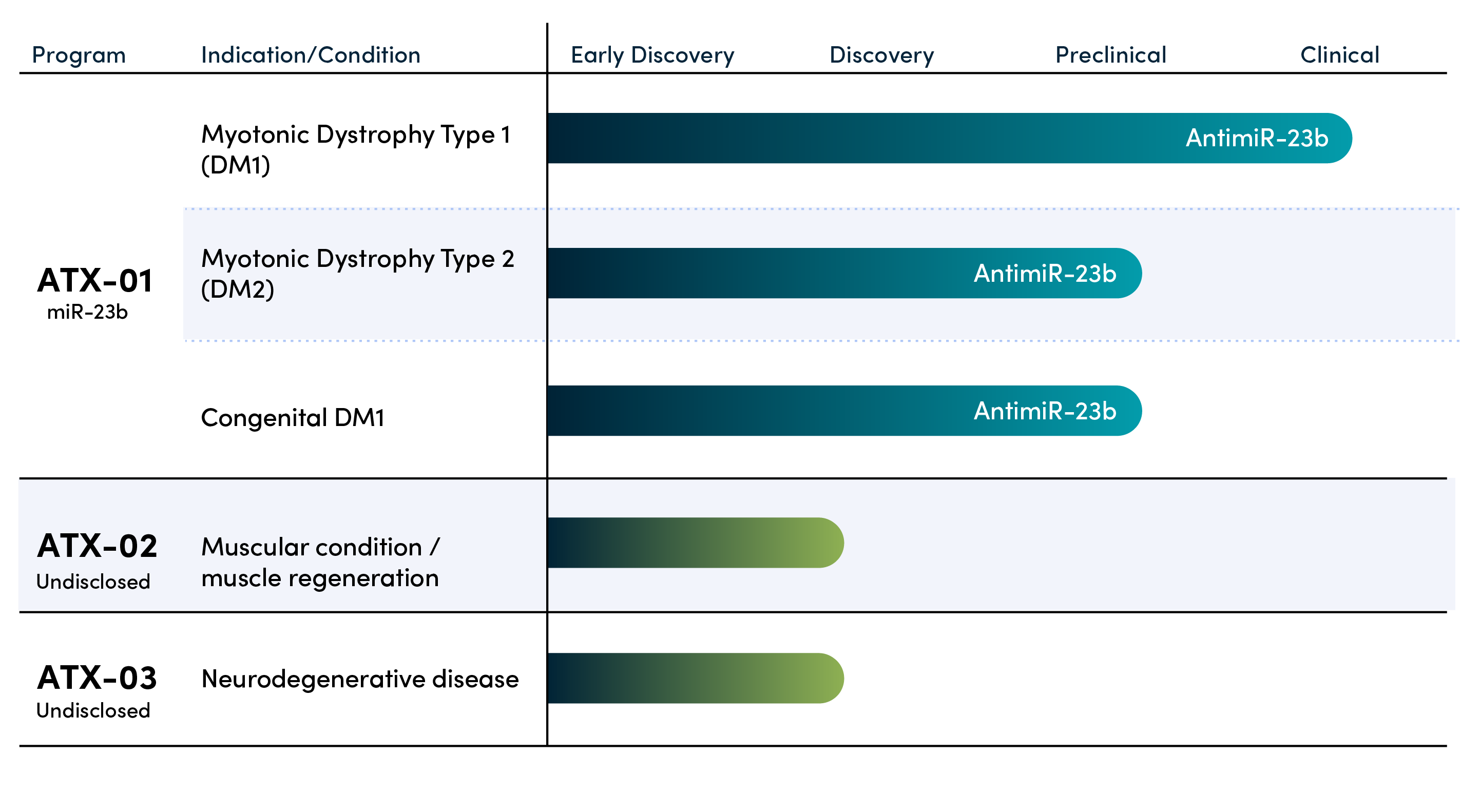
ATX-01 is ARTHEx's lead investigational RNA therapeutic for the treatment of myotonic dystrophy type 1 (DM1). Developed using the company's proprietary BOOST-On™ platform, ATX-01 is designed with a differentiated dual mechanism of action to degrade toxic DMPK RNA and restore the function of MBNL proteins, addressing the underlying molecular pathology of DM1. ATX-01 is currently being evaluated in the Phase 1/2 ArthemiR clinical trial and has the potential to address both the peripheral and central nervous system manifestations of this multisystem disease.
Myotonic Dystrophy Type 1 (DM1) is a highly disabling multisystemic disease with no known cure. DM1 symptoms affect mainly the musculoskeletal, nervous, and cardiac systems, although alterations in other systems or organs have also been reported. The onset of symptoms occurs most commonly during adolescence, and affected individuals have a shortened lifespan.
ARTHEx proposes a novel therapeutic approach for the treatment of DM1. We propose to inhibit miRNAs repressing MBNL proteins to increase MBNL levels and to release sequestered MBNL from toxic DMPK foci. This dual approach has shown promise in preclinical in vitro and in vivo models of the disease.